

Hemp seeds are nutritious oilseeds that provide plant-based protein, unsaturated fatty acids, dietary fiber, vitamins, and minerals.
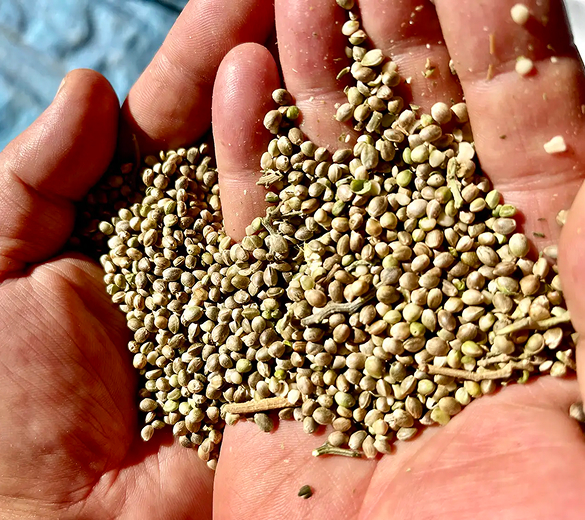
One of the characteristic nutritional features of hemp seeds is their fatty acid profile, which is rich in polyunsaturated fatty acids.
The main fatty acids are linoleic acid (LA – Omega-6), alpha-linolenic acid (ALA – Omega-3) and oleic acid. Lower amounts of gamma-linolenic acid (GLA – Omega-6) and stearidonic acid (SDA – Omega-3) are also present.
Linoleic acid and alpha-linolenic acid are essential fatty acids. Because the human body cannot synthesize these fatty acids, they must be obtained through the diet.
Fatty Acid Profile of 100 g Hulled Hemp Seeds
Fatty Acid | Amount |
|---|---|
Alpha-linolenic acid – ALA (Omega-3) | 8,68 g |
Stearidonic acid – SDA (Omega-3) | 0,62 g |
Linoleic acid – LA (Omega-6) | 27,36 g |
Gamma-linolenic acid – GLA (Omega-6) | 1,34 g |
Total polyunsaturated fat | 38,10 g |
These values correspond to approximately 9,3 g Omega-3 and 28,7 g Omega-6 in total. The Omega-6 : Omega-3 ratio is naturally approximately 3:1. This ratio is one of the distinguishing characteristics of the fatty acid profile of hemp seeds.
With its ALA content, hulled hemp seeds meet the condition for being high in Omega-3.
Because most of their fatty acids are unsaturated and polyunsaturated, they also meet the conditions for being high in unsaturated fat and high in polyunsaturated fat.
ALA contributes to the maintenance of normal blood cholesterol levels. The beneficial effect is obtained with a daily intake of 2 g of ALA.
Linoleic acid contributes to the maintenance of normal blood cholesterol levels. The beneficial effect is obtained with a daily intake of 10 g of linoleic acid.
Replacing saturated fats in the diet with unsaturated fats contributes to the maintenance of normal blood cholesterol levels.
Hulled hemp seeds contain 31.56 g of protein per 100 g. Energy from protein accounts for approximately 23% of total energy, meeting the condition for a high-protein food.
Hemp seeds contain all nine essential amino acids that the human body cannot synthesize. The main storage proteins in hemp seeds are edestin and albumin.
Protein quality and digestibility may vary depending on how the seed is processed. In scientific studies, the Protein Digestibility-Corrected Amino Acid Score (PDCAAS) has been reported as follows:
Form | PDCAAS |
|---|---|
Whole hemp seed | 0.49–0.53 |
Hemp seed meal | 0.46–0.51 |
Hulled hemp seed | 0.63–0.66 |
These values have been reported within the ranges shown above.
Removing the hull has been shown to increase protein digestibility and the corresponding PDCAAS value. The limiting essential amino acid in hemp protein is lysine.
Protein contributes to the growth and maintenance of muscle mass. Protein contributes to the maintenance of normal bones.
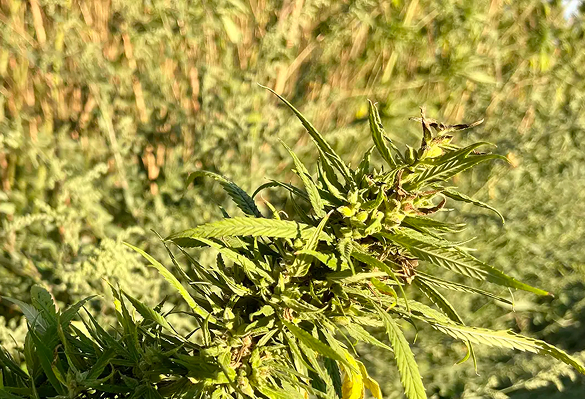
A significant proportion of the dietary fiber in hemp seeds is found in the seed’s outer hull. Therefore, there is a marked difference in fiber content between whole and hulled hemp seeds.
According to USDA reference data, hulled hemp seeds contain 4.0 g of dietary fiber per 100 g and, at this level, qualify as a source of fiber.
Fiber contributes to normal bowel function.
While whole seeds have a higher fiber content, removing the hull increases the relative proportion of protein and fat in the seed.
Hulled hemp seeds have a strong nutritional profile, particularly in magnesium, phosphorus, potassium, manganese, iron, zinc, and copper, as well as several B vitamins.
Per 100 g, hulled hemp seeds are high in magnesium, phosphorus, potassium, manganese, iron, zinc, copper, thiamine (B1), niacin (B3), vitamin B6, and folate, and are a source of riboflavin (B2).
Nutrient | Amount per 100 g | Approx. % of Daily Reference Intake | Nutritional Property and Role in Normal Body Function |
|---|---|---|---|
Magnesium | 700 mg | %187 | High. Magnesium contributes to normal energy-yielding metabolism and normal muscle function. |
Phosphorus | 1650 mg | %236 | High. Phosphorus contributes to normal energy-yielding metabolism and the maintenance of normal bones. |
Potassium | 1200 mg | %60 | High. Potassium contributes to normal muscle function and the maintenance of normal blood pressure. |
Manganese | 7,60 mg | %380 | High. Manganese contributes to the maintenance of normal bones and the protection of cells from oxidative stress. |
Iron | 7,95 mg | %57 | High. Iron contributes to the normal formation of red blood cells and hemoglobin and to normal oxygen transport in the body. |
Zinc | 9,90 mg | %99 | High. Zinc contributes to the normal function of the immune system and normal protein synthesis. |
Copper | 1,60 mg | %160 | High. Copper contributes to normal iron transport in the body and the normal function of the immune system. |
Thiamine (B1) | 1,275 mg | %116 | High. Thiamine contributes to normal energy-yielding metabolism and the normal function of the heart. |
Riboflavin (B2) | 0,285 mg | %20 | Source. Riboflavin contributes to normal energy-yielding metabolism and the reduction of tiredness and fatigue. |
Niacin (B3) | 9,20 mg | %58 | High. Niacin contributes to normal energy-yielding metabolism and the normal functioning of the nervous system. |
Vitamin B6 | 0,60 mg | %43 | High. Vitamin B6 contributes to normal protein and glycogen metabolism and the normal function of the immune system. |
Folate | 110 µg | %55 | High. Folatee contributes to normal amino acid synthesis and normal blood formation. |
Vitamin and mineral levels may vary depending on genetic variety, soil characteristics, growing conditions, harvesting, and processing methods.
Reference Nutritional Values for 100 g Hulled Hemp Seeds
Nutrient | 100 g |
|---|---|
Energy | 2313 kJ / 553 kcal |
Protein | 31,56 g |
Fat | 48,75 g |
Saturated fat | 4,60 g |
Monounsaturated fat | 5,40 g |
Polyunsaturated fat | 38,10 g |
Total carbohydrate* | 8,67 g |
Sugars | 1,50 g |
Dietary fiber | 4,00 g |
Alpha-linolenic acid – ALA (Omega-3) | 8,68 g |
Stearidonic acid – SDA (Omega-3) | 0,62 g |
Linoleic acid – LA (Omega-6) | 27,36 g |
Gamma-linolenic acid – GLA (Omega-6) | 1,34 g |
Cholesterol | 0 mg |
These are reference nutritional values for hulled hemp seeds. Actual values may vary depending on variety, growing conditions, and processing methods.
Amino Acid Profile
Reference amino acid values for 100 g of hulled hemp seeds:
Amino Acid | Amount |
|---|---|
Tryptophan | 0,369 g |
Threonine | 1,269 g |
Isoleucine | 1,286 g |
Leucine | 2,163 g |
Lysine | 1,276 g |
Methionine | 0,933 g |
Cystine | 0,672 g |
Phenylalanine | 1,447 g |
Tyrosine | 1,263 g |
Valine | 1,777 g |
Arginine | 4,550 g |
Histidine | 0,969 g |
Alanine | 1,528 g |
Aspartic acid | 3,662 g |
Glutamic acid | 6,269 g |
Glycine | 1,611 g |
Proline | 1,597 g |
Serine | 1,713 g |
Sources
USDA National Nutrient Database for Standard Reference — Seeds, hemp seed, hulled (NDB No. 12012).
House JD, Neufeld J, Leson G. Evaluating the Quality of Protein from Hemp Seed (Cannabis sativa L.) Products Through the Use of the Protein Digestibility-Corrected Amino Acid Score Method. Journal of Agricultural and Food Chemistry, 2010.
Turkish Food Codex — Nutrition Claims and Conditions of Use.
Republic of Türkiye Ministry of Health, Turkish Medicines and Medical Devices Agency — Guideline on the Use of Health Claims in Foods and Food Supplements.
Head Office: Akdeniz Mah. Cumhuriyet Bulvarı No: 120
Konak, İzmir, TURKEY 35210
Production Facility: Narlıdere – İzmir
+90 232 700 18 24
info@www.powerseed.com.tr
© 2026 YELBİS. All rights reserved.
Powerseed and AsaBotanica are brands developed by YELBİS.