

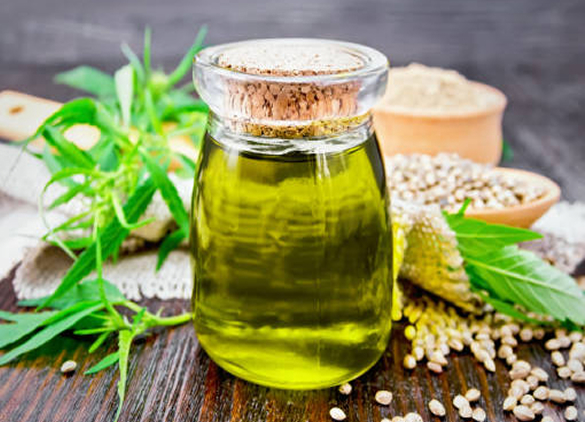
Hemp seed oil is a plant-based oil with a characteristic fatty acid profile, rich in Omega-3 fatty acids, unsaturated fats, and polyunsaturated fats.
The primary nutritional characteristic of hemp seed oil is that most of its fatty acids are unsaturated fatty acids.
Scientific studies report that approximately 90% of the total fatty acids in hemp seed oil may be unsaturated fats, while approximately 70–80% may be polyunsaturated fats.
Main fatty acids:
In smaller amounts, gamma-linolenic acid (GLA – Omega-6) ve stearidonic acid (SDA – Omega-3) may also be present.
Reference Fatty Acid Profile for Hemp Seed Oil
Fatty Acid / Fat Group | Approximate Range Reported in the Literature |
|---|---|
Linoleic acid – LA (Omega-6) | %55–64 |
Alpha-linolenic acid – ALA (Omega-3) | %15–26 |
Oleic acid | approximately %9–23 |
Total unsaturated fatty acids | approximately %90 |
Total polyunsaturated fatty acids | approximately %70–80 |
Omega-6 : Omega-3 ratio | approximately 2,5:1 – 3,5:1 |
Thanks to this profile, hemp seed oil meets the nutritional claim conditions for high Omega-3, high unsaturated fat ve high polyunsaturated fat.
The main Omega-3 fatty acid in hemp seed oil is alpha-linolenic acid (ALA).
ALA is an essential fatty acid that the human body cannot synthesize and therefore must be obtained through the diet.
The ALA content of hemp seed oil is generally reported in the literature to account for approximately 15–26% of total fatty acids.
ALA contributes to the maintenance of normal blood cholesterol levels. The beneficial effect is obtained with a daily intake of 2 g of ALA.
The fatty acid generally present at the highest level in hemp seed oil is linoleic acid (LA).
Linoleic acid is an essential fatty acid belonging to the Omega-6 family. Because the human body cannot synthesize it, it must be obtained through the diet.
The linoleic acid content of hemp seed oil is reported in the literature to be approximately 55–64%.
Linoleic acid contributes to the maintenance of normal blood cholesterol levels. The beneficial effect is obtained with a daily intake of 10 g of linoleic acid.
One of the characteristic features of hemp seed oil is that it contains substantial amounts of both Omega-6 and Omega-3 fatty acids within the same oil matrix.
In the scientific literature, the Omega-6 : Omega-3 ratio of hemp seed oil is most commonly reported to be approximately 2.5:1 to 3.5:1, with a typical profile of around 3:1.
This ratio is a natural characteristic of hemp seed oil’s distinctive fatty acid composition.
Approximately 90% of the fatty acids in hemp seed oil may be unsaturated fats.
Most of these are the polyunsaturated fatty acids linoleic acid and alpha-linolenic acid. Among the monounsaturated fatty acids, the principal one is oleic acid.
This composition supports hemp seed oil’s high unsaturated fat and high polyunsaturated fat characteristics.
Replacing saturated fats in the diet with unsaturated fats contributes to the maintenance of normal blood cholesterol levels.
Oleic acid is also an unsaturated fatty acid.
In addition to the primary fatty acids LA and ALA, the fatty acid profile of hemp seed oil may contain smaller amounts of:
The amounts of GLA and SDA may vary depending on the hemp variety and growing conditions.
These two fatty acids form part of the characteristic polyunsaturated fatty acid profile of hemp seed oil.
Hemp seed oil consists of more than fatty acids alone. Its natural composition may also contain smaller amounts of minor oil components such as tocopherols, phytosterols, phenolic compounds, and pigments.
Among the tocopherols in hemp seed oil, gamma-tocopherol (γ-tocopherol) is generally predominant.
Among the phytosterols, β-sitosterol is one of the important components.
The levels of these components may vary considerably depending on the hemp variety, seed quality, pressing method, and storage conditions.
Hemp seed oil can be obtained by mechanical pressing. In cold pressing, the oil is mechanically separated from the seed without the application of high temperatures.
Unrefined hemp seed oil may naturally display greenish hues, a characteristic aroma, and a mildly nutty flavor.
The intensity of its color and aroma may vary depending on the seeds used and the production conditions.
Because hemp seed oil is high in polyunsaturated fatty acids, it is sensitive to heat, light, and oxygen.
To preserve the oil’s nutritional and sensory properties, it is recommended to store it:
After opening, refrigerated storage helps preserve the quality of the oil.
Because of its high polyunsaturated fat content, hemp seed oil is particularly suitable for salads, cold dishes, and uses that do not involve heating. It is not preferred for prolonged cooking at high temperatures.
Nutritional Property | Reference Property and Role in Normal Body Function |
|---|---|
High in Omega-3 | ALA may account for approximately 15–26%. ALA contributes to the maintenance of normal blood cholesterol levels. |
Linoleic acid – Omega-6 | At approximately 55–64%, it is the principal fatty acid in the oil. Linoleic acid contributes to the maintenance of normal blood cholesterol levels. |
High in unsaturated fat | Approximately 90% of total fatty acids may be unsaturated. Replacing saturated fats with unsaturated fats contributes to the maintenance of normal blood cholesterol levels. |
High in polyunsaturated fat | They may account for approximately 70–80% of total fatty acids. |
Approximate 3:1 Omega-6 : Omega-3 profile | It is one of the distinguishing characteristics of hemp seed oil’s fatty acid composition. |
GLA and SDA | They are characteristic Omega-6 and Omega-3 fatty acids found in smaller amounts in the oil. |
Tocopherols and phytosterols | They are among the natural minor components of hemp seed oil. |
Fatty acid ratios may vary depending on the hemp variety, growing conditions, harvest, processing, and storage conditions. The values provided are reference ranges reported for hemp seed oil in the scientific literature.
Head Office: Akdeniz Mah. Cumhuriyet Bulvarı No: 120
Konak, İzmir, TURKEY 35210
Production Facility: Narlıdere – İzmir
+90 232 700 18 24
info@www.powerseed.com.tr
© 2026 YELBİS. All rights reserved.
Powerseed and AsaBotanica are brands developed by YELBİS.